
Facilitating conversation is certainly a skill that is important in research, evaluation, and strategy work. Sometimes, I am the conversation facilitator, such as in workshops, one-on-one interviews, or focus groups. Other times, I am analyzing transcripts from a conversation someone else has facilitated. Show me a transcript, and without even reading everything, I can normally tell pretty quickly if it is a good facilitated conversation.
A Good Facilitated Conversation
For example, this is a good looking facilitated conversation from a focus group. The facilitator’s contributions are indicated in gray while individual participants’ contributions appear in colored text.
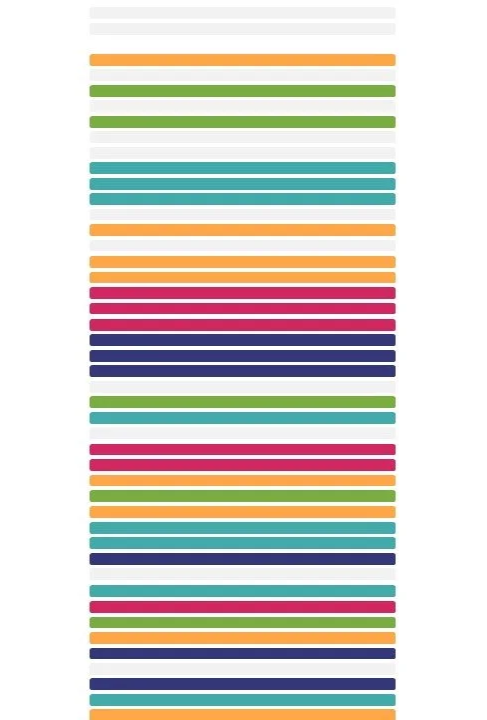
Some things that make this a good-looking facilitated conversation:
The facilitator appears sparsely in the conversation: After starting off the conversation, the facilitator takes up little space in the transcript. They continue to participate throughout, but in limited capacity (with probing questions, clarifying questions, keeping discussion on track, etc.).
The participants appear abundantly, in varying degrees, orders, and consistently throughout the conversation: Once the conversation begins, you want to see participants as the primary contributors (colored lines should be most of the transcript). But moreover, in the visual above which represents different individual participants in different colors, you want to see a variety of contributors. While not everyone has to contribute exactly the same, one participant (or color) should not be noticeably more dominant than another.
A Not-So-Good Facilitated Conversation
By comparison, here is an example of a not-so-good facilitated conversation:
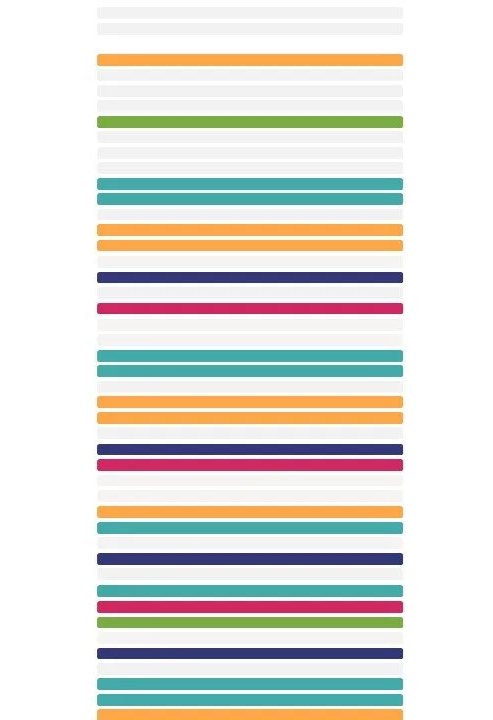
In this example:
The facilitator takes up nearly half of the space, which stated another way, means participants have less than half of the speaking time.
Some participants are represented very little. Our green participant, for instance, contributes just twice in relatively short responses. Blue, teal, and orange participants contribute much more often and more verbosely, represented by the number of consecutive rows of color.
Why Does it Matter?
Facilitated conversations are almost always time bound. You have 60 or 90 minutes with a group to learn as much as you can. Therefore, you want to make optimal use of your time to let all of your participants have space to show their colors! In a subsequent post, I will get into what strategies can help you to do so.
