This month's picks all circle back to one essential question: Are we living up to our purpose? From interrogating AI adoption, to building a values-based decision-making tool, to rediscovering what drew us to museum work in the first place, we share resources that push us to think about how we work and why.
What’s Making Us Curious?

What’s AI for?
“‘To What End?’ This question is one that we often use in our Audience Impact Strategy work, so I was very appreciative that this is the frame of the second part of No Small Endeavor’s two-part series, “The Human Cost of AI.” One of my key takeaways is that we need to be clear about why we are even considering using AI in work and then reflect critically on whether the proposed use actually matches our purpose.”
— Amanda

Beyond a Checklist
“The challenge museums have with saying "no" is one we hear again and again. I enjoyed this blog post from Rebecca Shulman and Anne Bergeron that describes how they helped an art museum develop a values-based decision-making guide — a practical tool that goes beyond broad mission statements to ask sharper questions about whether a program truly serves the community. I love that it includes a link to the actual guide, so you can explore it for yourself. If you're navigating resource constraints and competing priorities, this is a useful read.”
— Stephanie

On Becoming
“At this year’s American Alliance of Museums session “Activating Museums as Joyful Places for Health and Well-being” a presenter asked, “What does becoming mean for you?” As a million thoughts raced through my mind, I went back to (another session presenter) Ray Williams’ 2010 article on the Personal Response Tour, one of the first museum education articles I ever read. It’s one of the best, concrete examples of transformative, object-based dialogue, and reminds me of how it felt “becoming” a museum educator.”
— Hannah
What’s New At Kera?
Check out Amanda’s new Learning Hub post, all about how to spot a good facilitated conversation–whether it's an interview, focus group, or workshop dialogue–just by skimming the conversation’s transcript.
We are excited to be working with the Eiteljorg Museum of American Indians and Western Art over the next few years as part of a grant they received through the Lilly Endowment’s Religion and Cultural Institutions Initiative. We just wrapped up formative evaluation for a new exhibition on indigenous tattoos as expressions of cultural identity and spirituality, opening this fall!
This month, we kick off a new project with the Cape Fear Museum as it moves to a brand new building with all new exhibitions. We will be helping them understand visitor experiences in their new science gallery, Science Matters.
Moment of Wonder
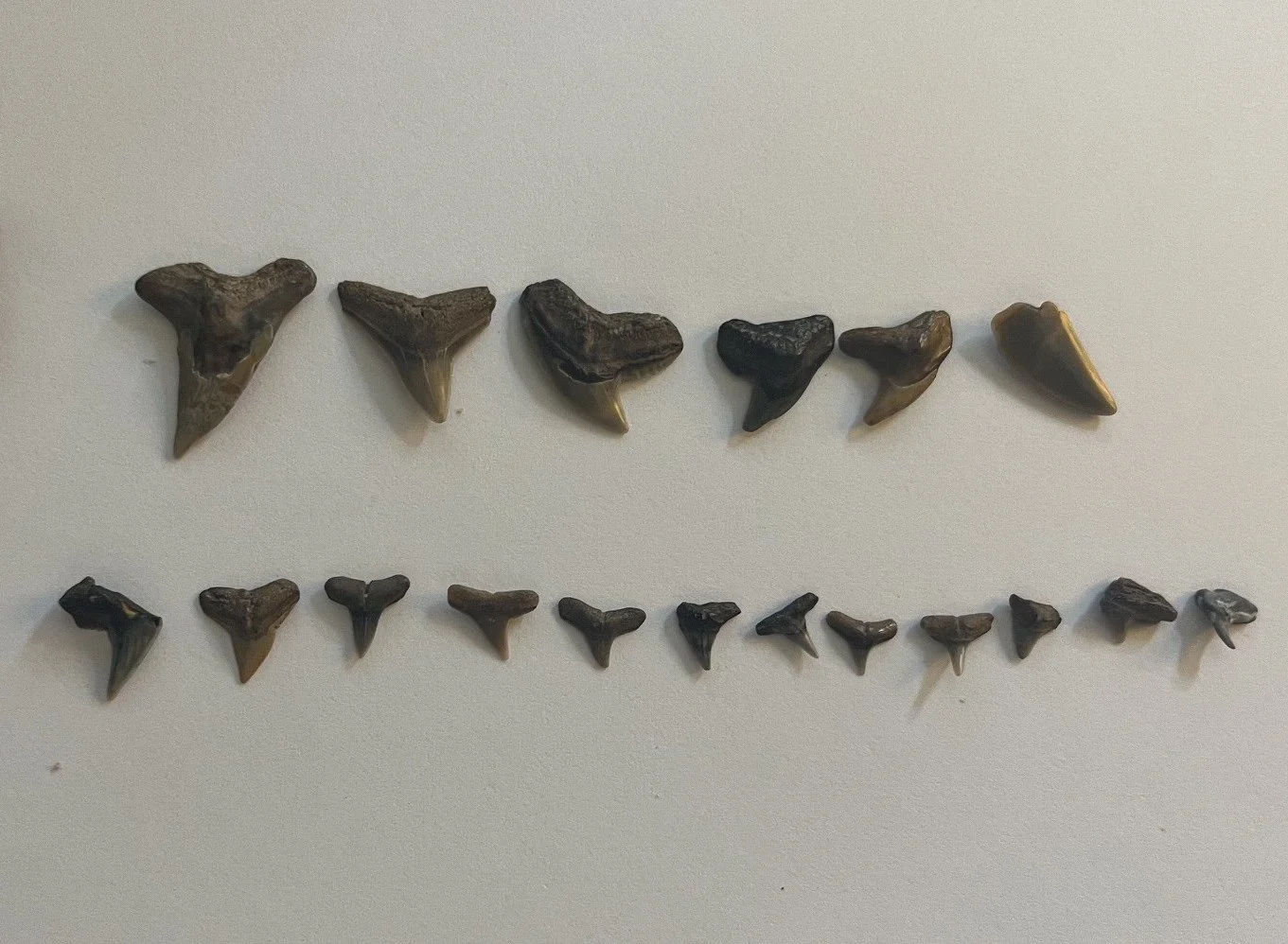
“A couple times a year, I take a day trip with my family to a nearby state park to look for shark teeth and other fossils. I love sifting through the sand while the cool water and gentle waves from the river lap at my ankles. It’s very methodical–dig, sift, dump, dig, sift, dump–and I find the rhythm of it all relaxing, punctuated by the thrill of finding a little “treasure” every once and while. This year, it’s how I spent Mother’s Day, and I loved it. While I’m still waiting to find my Megalodon tooth (visitors find one once every couple years), I’m pretty happy with our finds over the past few years, including some new additions from our Mother’s Day expedition."
— Katie